|
Where is Kakadu National Park in Australia
Kakadu National Park an Australian Natural Icon covers almost
20,000 square kms and is 253 kms East of Darwin the capital
city of the Northern Territory, Australia. Kakadu
National Park is a World Heritage listed area that has been
listed for it's cultural and natural heritage and Kakadu is
the largest terrestrial national park in Australia. Life
in the park does depends on the water, also in respect to
the tropical monsoon climate that produces the downpours of
the tropical humidity of the "wet" season, and the milder
weather of the "dry" season.
Kakadu National Park is the gateway
to Arnhemland. The sealed roads from Darwin to Kakadu is via
the Arnhem Highway and from Katherine to Kakadu National Park
via the Kakadu Highway. The Bowali
Visitor Centre near Jairu in Kakadu
National Park is located 253 km from Darwin
in Northern Territory Australia via the Arnhem
Highway entrance. If travelling by road, you should allow
3 hours travelling time from Darwin.
|
 |
Roads to Kakadu National Park
Road conditions in the Park vary according to the tweo seasons
being the Green 'Wet' season or Dry season. Widespread Green
'Wet' season flooding occured historically and frequently
during November to April there nowdays the seasons have changed
signifciantly. Therefore you should check the road conditions
well before your departure . Up-to-the-moment road reports
can be obtained from the Bowali Visitor Centre (Telephone
+61 (0) 8 8938 1120). The Arnhem and Kakadu Highways are sealed
and generally remain open throughout the year. Green 'Wet'
season flooding associated with any prolonged heavy rains
may have various locational temporary closures.
We we here also provides helpful tips on Kakadu National
Park and what to see and activities available, visitor safety,
park camping and accommodation facilities, emergency contacts
and useful Kakadu Parks information.
If time allows, we advise you stay in the park for a few
days so that the major sites can be explored at your leisure.
Kakadu National Park can be visited selfdrive a 2 wheel drive
vehicle though access is limited to the Kakadu Highway and
the Arnhem Highway. Ubirr, Yellow Waters, Jabiru and Nourlangie
Rock being main the extent of where you can visit a 2 wheel
drive vehicle. Please
note information on this site.
Select
one of the following regions to access maps and information
on the area:
|
| |
Access to the following roads may vary during the wet season:
|
| |
| The Arnhem and Kakadu Highways
are sealed and generally remain open throughout the year. Wet
season flooding associated with prolonged heavy rains can cause
temporary closures. |
| |
| The Nourlangie road is sealed and generally remains
open throughout the year. Rare flooding associated with prolonged
heavy rains may prevent access, sometimes for several days.
|
| |
| The Ubirr road is sealed but subject to wet season
flooding at Magela Creek. During the wet season, the Magela
Creek crossing is often impassable or restricted to four-wheel
drives. |
| |
| The Jim Jim/Twin Falls road is a four-wheel-drive track
and is impassable during the wet season. Closure is dictated
by the length of the wet season, road conditions and visitor
safety related to estuarine crocodiles. |
| |
| The Gunlom road is unsealed and is subject to flooding.
It is closed at times during the wet season. |
| |
| The Gubara road access is unsealed and is open to two-wheel-drive
vehicles during the dry season. The road generally changes to
four-wheel-drive access in the wet season. It is occasionally
impassable. |
| |
Vehicles over 4500 kilograms (tare) are NOT permitted
on the following roads and tracks:
* Jim Jim Falls - Twin Falls
* Maguk (Barramundi Gorge)
* Graveside Gorge
* Jarrangbarnmi (Koolpin) Gorge
* Rockhole
* 4 Mile Hole - 2 Mile Hole
* Gubara |
| |
| Access updates - Access
updates provide detailed information regarding access to
visitor sites within Kakadu National Park. These detailed updates
are issued as required throughout the year, particularly during
seasonal transitions before and after the wet season. |
| |
| Fuel - Unleaded and leaded petrol and diesel fuel
are available at the Kakadu Resort (South Alligator), Jabiru,
Cooinda and the Wirnwirnmila Mary River Road House. Refuel your
vehicle as frequently as possible. |
|
|
Kakadu National Park - Seasons
But Australia's Kakadu sees seasons of varied extremes --
so varied, in fact, that the park's longtime aboriginal inhabitants
have divided the year into six distinct seasons.
• Kakadu
Seasons - Gunumeleng Pre-Monsoon Storm Season - Gunumeleng,
from mid-October to late December, may in fact last from a
few weeks to several months.
• Kakadu
Seasons - Gudjewg - Monsoon Season - Gudjewg, from January
to March, can be described as the 'true' wet season.
• Kakadu
Seasons - Banggereng - Knock 'em down storm Season - Banggerreng,
in April, is the season when the rain clouds have dispersed
and clear skies prevail.
• Kakadu
Seasons - Yegge - Cooler but still humid Season - Yegge,
from May to mid-June, is relatively cool with low humidity.
• Kakadu
Seasons - Wurrgeng - Cold Weather Season - Wurrgeng, from
mid-June to mid-August, is the 'cold weather' time; humidity
is low, daytime temperatures are around 30°C and night-time
temperatures are around 17°C.
• Kakadu
Seasons - Gurrung - Hot Dry Weather - Gurrung, from mid-August
to mid-October, is hot and dry.
Resources
• www.parksandwildlife.nt.gov.au/
• www.environment.gov.au/parks/
• www.facebook.com/RoadReportNT
• www.roadreport.nt.gov.au/
• www.ntlis.nt.gov.au/roadreport/
• www.toiletmap.gov.au/
• www.travelnt.com/
• https://www.northaustralianhelicopters.com.au/
|
|
|
| 4WD Cars &
4WD Campers |
2WD Campers
& Motorhomes |
No Hidden
Costs |
• Take your adventure OFF-ROAD!
• The ultimate camping experience
• 4WD Campervans also available |
• Great holidays at affordable prices
• Spacious and feature rich!
• Perfect getaway for families & couples |
• All applicable fees and charges included
• Detailed price breakdown
• Know what you're paying for! |
|
|


 Click
here for manual old fashion customized quote Click
here for manual old fashion customized quote
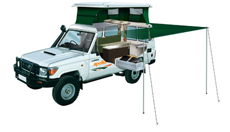
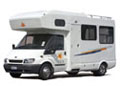
Example of a 4wd camper hire
Click
here email us your enquiry if your not sure
If you don't wish a instant quote and wish a manual customised
one then:
Please include this in your request for availability and quote.
 Full
Name Full
Name
Country
of residence
Main
Driver/Hirer Licence issued from which country
Number
of those travelling
Ages
of drivers
Ages
of children under 12 (child seat guidelines)
Telphone
No. + country code
Exact
start and Finish date and such as Darwin to Broome
Route
such as Gibb River Road
|
|
Adds by Australia 4 Wheel Drive Rentals
|
|
|
|
|
|
|
|
|
|
|
|
|
|
|
|
|
 www.kakadunationalparkaustralia.com
is part of the specialist for selfdrive leisure vehicle rentals
and tour specialist including camping and accommodated one
day or extended tours and safaris from the group of Goholi
groop being an experienced respected licensed Travel Agent
in Darwin, Northern Terriotry Australia (Tel +61 (0) 8 7999
7511). Why come to us - Let us try to get you a discount off
the recommended rates with professional and experienced service.
www.kakadunationalparkaustralia.com is an 'Affiliate'
of the Australia 4 Wheel Drive Rentals group of sites. A licensed
Australian Travel Agent based in Northern Territory Australia. www.kakadunationalparkaustralia.com
is part of the specialist for selfdrive leisure vehicle rentals
and tour specialist including camping and accommodated one
day or extended tours and safaris from the group of Goholi
groop being an experienced respected licensed Travel Agent
in Darwin, Northern Terriotry Australia (Tel +61 (0) 8 7999
7511). Why come to us - Let us try to get you a discount off
the recommended rates with professional and experienced service.
www.kakadunationalparkaustralia.com is an 'Affiliate'
of the Australia 4 Wheel Drive Rentals group of sites. A licensed
Australian Travel Agent based in Northern Territory Australia.
Goholi Pty Ltd
Postal: GPO Box 380, Darwin, NT 0801
Email: info@australia4wdrentals.com
www.kakadunationalaprkaustralia.com has affliation with the
following links
• http://www.australia4tours.com
• http://www.kakadu-tours.com
• http://www.australia4wheeldriverentals.com
• http://www.australia4wdrentals.com
•Home
• Contact
Us • Site
Disclaimer • Weather
Reports • Currency
Conversion • General
Links • Site
Map
Australian Tour Information - Mission Statement
Please note some of these links are supplied only as a link
for information our company has no affliation some of these
links. Important;
This site is for the beneift of those researching for their
next vacation to Kakadu National Park in Northern Territory
Australia also know as the 'Top End'.
Australian Kakadu National Park travel guide and information
is not the offical site - the offical government site is http://www.kakadu.com.au.
This search site offering links to Kakadu, Litchfield, Uluru,
Darwin and Northern Territory accommodations, tours, safaris,
activities, nature parks, nature reserves and adventure activities.
|
|
|